
The Market Is Splitting: Why Price Range Now Matters More Than Ever

In real estate, markets rarely move in one single direction.
Instead, they tend to evolve gradually. Certain segments begin to change first while others remain strong. Over time those shifts spread across the broader market.
Today we are beginning to see the early stages of that process.
Across many towns in Southeastern Connecticut and coastal Rhode Island, the market is no longer behaving as one unified environment. Instead, it is fragmenting by price range.
Some price tiers remain firmly in seller territory, while others are moving toward balance.
Understanding this shift requires returning to the fundamentals that have always governed real estate markets:
- Supply and demand
- Months of inventory
- Absorption rates
- Affordability and financing conditions
These fundamentals never disappeared during the pandemic surge—they were simply overwhelmed by extraordinary circumstances.
Now they are beginning to matter again.
A Return to Market Fundamentals
During the pandemic years, historically low interest rates and sudden shifts in housing preferences created a powerful surge in demand. Inventory fell dramatically, and sellers gained control across many price ranges.
In many markets, homes sold almost immediately, often above asking price.
But that environment was not the historical norm.
Traditionally, markets move through cycles where supply, demand, and affordability interact in more balanced ways.
One of the most important indicators professionals watch is months of inventory:
- 0–3 months of inventory: Seller’s market
- 4–6 months: Balanced market
- 7+ months: Buyer’s market
When inventory begins to increase in certain price tiers while remaining tight in others, it signals that the market may be entering a more complex and segmented phase.
That is what we are beginning to see today.
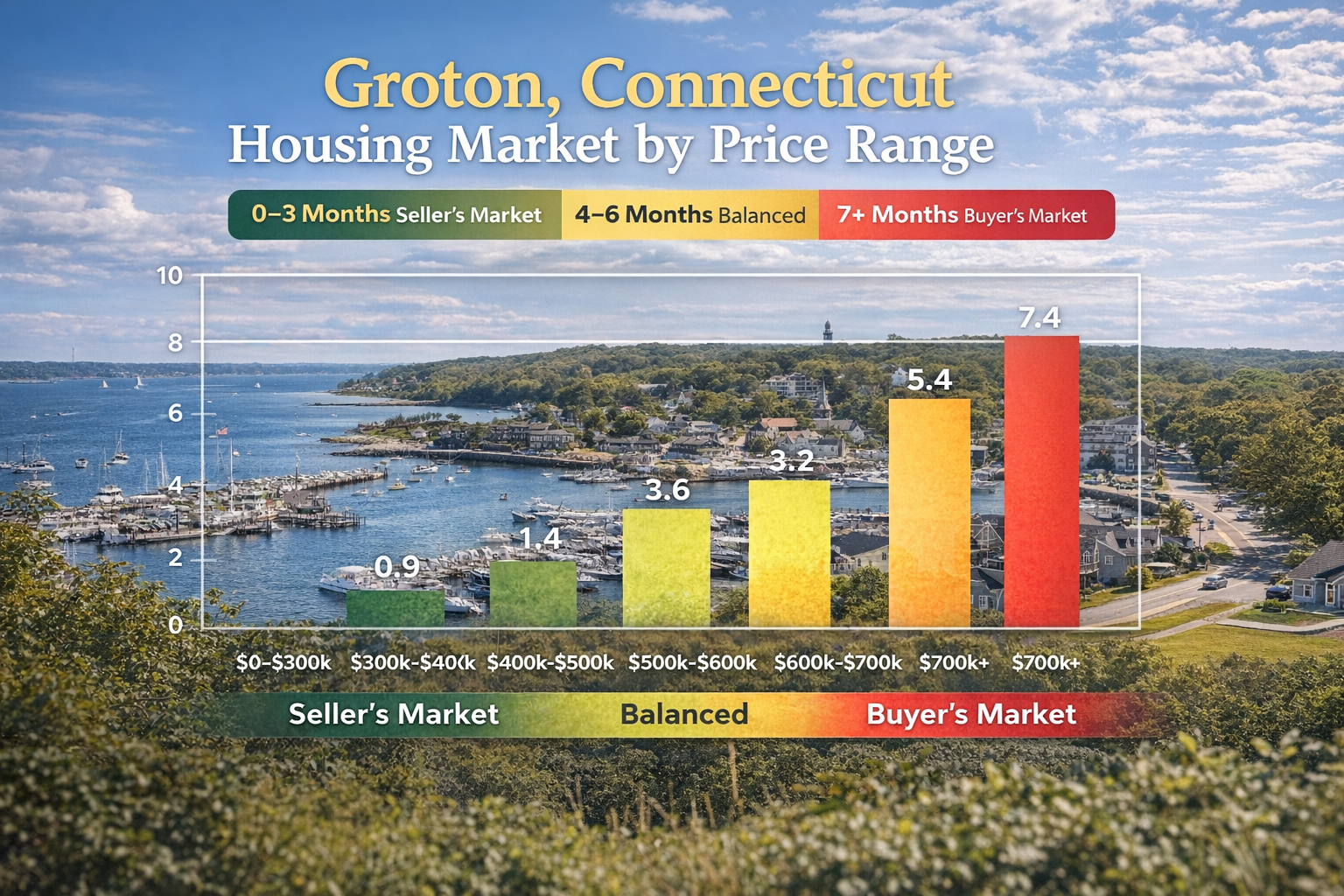
Connecticut Example: Groton
In towns like Groton, lower price ranges remain extremely competitive.
Starter homes and moderately priced properties continue to attract strong demand from first-time buyers, workforce households, and employees connected to major local employers such as the Naval Submarine Base and Electric Boat.
Inventory in these lower tiers remains limited, keeping conditions firmly in seller territory.
However, as prices rise, the dynamics begin to change.
Higher price ranges tend to see fewer buyers, greater sensitivity to interest rates, longer marketing times, and more negotiation.
This creates the first signs of balance returning to the market.
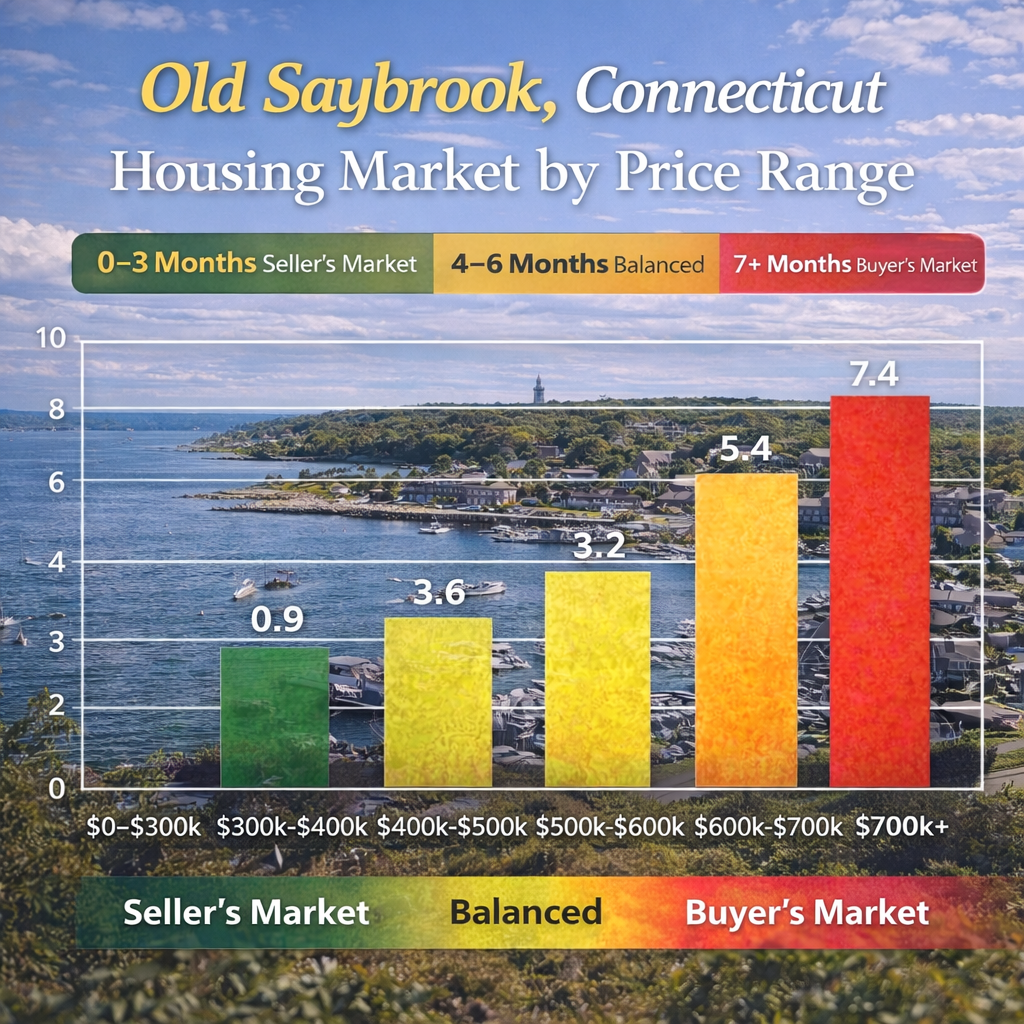
Coastal Connecticut: Old Saybrook
A similar pattern is visible in Old Saybrook.
Lower price ranges remain competitive due to limited inventory and continued demand for coastal housing.
However, higher-priced coastal homes are beginning to experience slightly longer marketing times and increased buyer scrutiny.
This does not signal a weakening market. Instead, it reflects something far more typical of long-term real estate cycles: pricing discipline returning to the marketplace.
Sellers who price accurately continue to attract strong interest. Properties that push beyond market tolerance may simply take longer to find the right buyer.
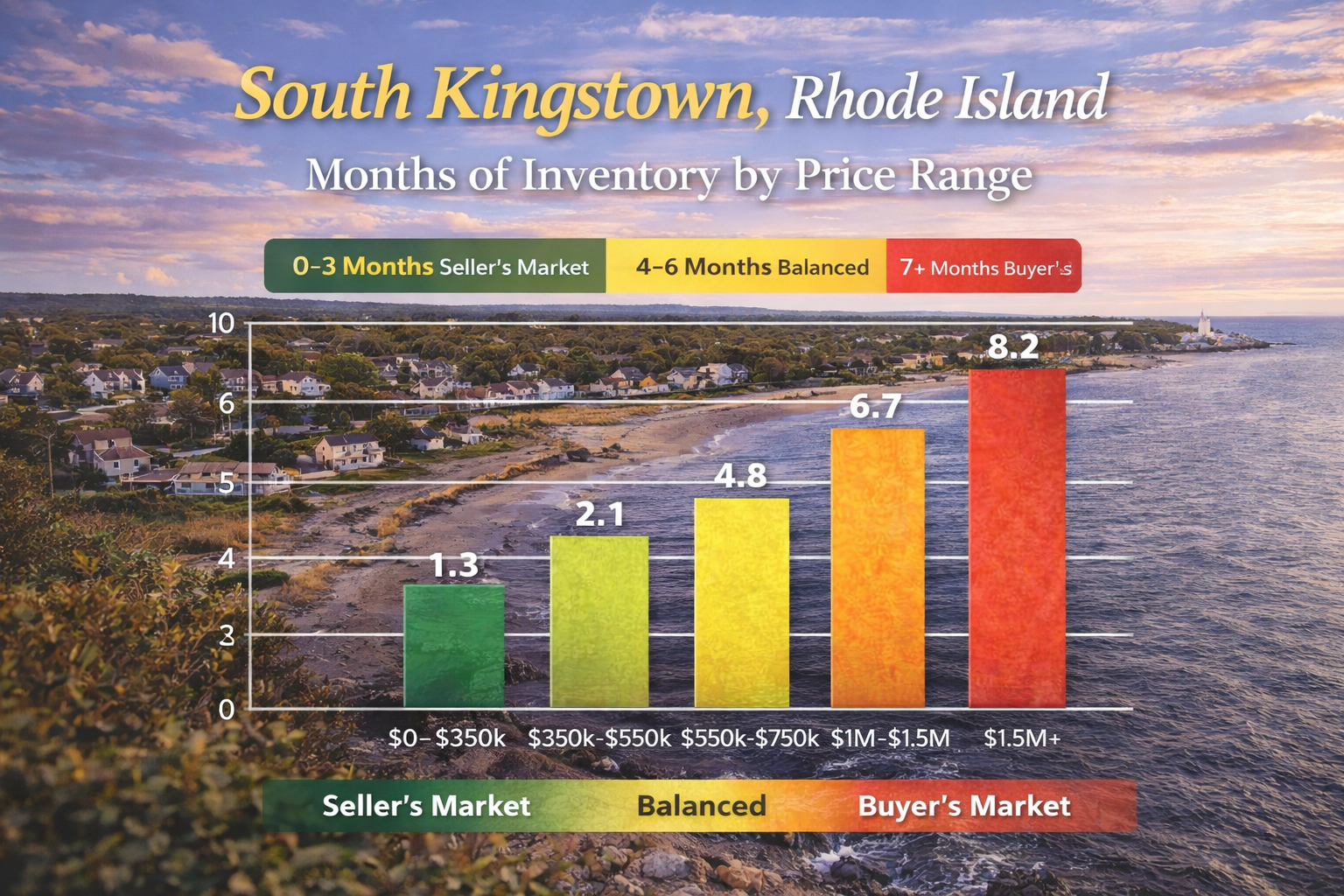
Rhode Island Example: South Kingstown
Across the state line, South Kingstown provides another example of how markets can fragment by price range.
The town serves several distinct buyer groups:
- Local workforce housing
- Housing tied to the University of Rhode Island
- Coastal and second-home buyers
Because these buyer pools behave differently, market conditions vary across price tiers.
Lower price ranges remain tight and competitive.
Higher price tiers, however, often see more inventory and a slightly slower pace of absorption.
This type of segmentation is common during transitional phases of real estate cycles.
A Changing Global Backdrop
Real estate markets do not exist in isolation.
They are influenced by broader economic conditions, financial markets, and global events.
The recent escalation of conflict involving Iran is one example of how geopolitical developments can influence economic sentiment. Historically, uncertainty in global markets can affect interest rates, consumer confidence, and investment behavior.
However, it is important to view these events within a broader context.
Southeastern Connecticut and coastal Rhode Island benefit from several stabilizing forces, including major regional employers and long-standing housing demand tied to defense, maritime, healthcare, and education.
Institutions such as Electric Boat and the Naval Submarine Base provide long-term economic anchors that help support housing demand throughout economic cycles.
Because of these structural factors, our region has often demonstrated resilience even when broader national or global uncertainty emerges.
What Buyers and Sellers Should Watch
As markets transition from extreme seller conditions toward greater balance, several indicators become increasingly important:
- Months of inventory
- Days on market
- Price reductions
- Absorption rates
- Affordability constraints
These metrics provide early signals of how supply and demand are evolving.
For buyers, a more segmented market may create new opportunities, particularly in higher price ranges where inventory is increasing.
For sellers, the lesson is straightforward: pricing strategy matters again.
The Seaport Perspective
At Seaport, our advisory approach focuses on long-term market cycles rather than short-term headlines.
Our Market Pulse program examines decades of historical sales data across Connecticut and Rhode Island. By studying how markets have behaved through previous cycles, we can better understand what early shifts may signal.
Markets rarely move from extreme seller dominance directly into downturns.
More often, they first transition through periods of segmentation and normalization, where supply and demand begin to rebalance across different price tiers.
That is the phase we may be entering now.
History rarely repeats perfectly. But it often rhymes.
Next in the Series
The First Signs of a Market Shift — What Professionals Watch Before the Headlines Appear
Enjoy this blog post? Click here to subscribe for updates
Leave A Comment